


Repotting your bonsai is essential for allowing it to grow healthy. But what is the best soil to use for your bonsai tree? In this article we’ll explore the topic in more detail.
What Soil is Best to Use for Bonsai Trees?

The best bonsai soil will depend on the tree species you have. Different trees demand different nutrients, growing conditions and ultimately – different soil mixtures. It’s always important to consult a care guide for the specific species to find the perfect soil mixture that will allow your tree to thrive.
Speaking in general, the soil mixtures can be divided into ones for conifers and ones for deciduous trees. While both mixtures consist of Akadama for water retention, pumice for substrate structure and lava rock for aeration, the proportion in which they are mixed will vary.
It’s also important to note that the soil mix should be adapted to your location. If you live in a place with a wet climate, we recommend adding more lava rock or gravel to improve drainage.
What to Consider When Choosing Bonsai Soil?
The soil mixture you use for repotting will create the conditions your tree will grow in, so it’s important to consider a few different factors. The specific soil mixture you use will affect the qualities of the soil medium including:
Porosity
When speaking about porosity there are two different types
- Spatial porosity – referring to the space between the particles in a medium;
- Effective porosity – how easily water passes through the particles.
The porosity of your soil medium also affects the level of nutrients stored in the soil.
Compactness
The more compact your soil mixture is, the less room there is for air to circulate as the space between particles is smaller. Compact soil can be more difficult to water as it takes longer for water to pass through.
Structure
Since your bonsai will be in the same soil for a few years, it’s important to consider how long it will keep its structure. Your bonsai soil shouldn’t break down overtime. It’s also important to note that the soil’s qualities may change over time.
Nutrients
The nutrients contained initially in your soil will affect how often you need to feed your bonsai.
pH Levels
Plants need a certain level of pH to thrive. How acidic or alkaline the soil is will affect how your bonsai grows. For example, an Azalea bonsai will prefer acidic soil with a pH between 4.5 to 6.0 as compared to the neutral pH of 7.0.
What are the Different Bonsai Soil Components?
As mentioned above, typically bonsai soil is made out of different components mixed together in different proportions. The most common bonsai soil components are pumice, Akadama and lava rock. Sometimes you may also use fine gravel, sand or organic potting compost to get different levels of porosity. Let’s explore the different soil components in more detail.
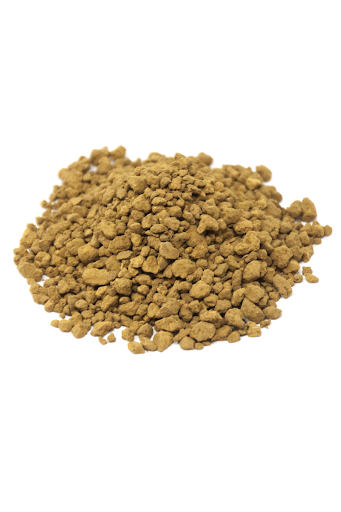
Akadama
Akadama is by far the most common component of every bonsai soil mixture. This hard-baked Japanese clay subsoil is specifically produced for potting bonsai trees. Its hardness means it breaks down slower than other mediums, while its granular structure allows it to provide good drainage and still hold water.
You can use Akadama on its own, however, since it’s being imported from Japan it can be quite pricey, so it’s recommended to mix it with other soil components. Or save it only for the rarest trees in your collection.
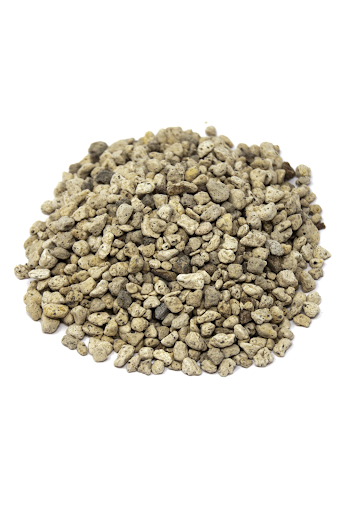
Pumice
As a soft volcanic rock, pumice is great at absorbing water and nutrients. If used in a bonsai soil mix it allows the roots to ramify, while helping retain a good level of moisture.
Lava Rock
While lava rock also retains water and gives your bonsai soil a good structure, your bonsai’s roots can’t grow into it.
Organic Potting Compost
Typically made of a mixture of moss, perlite and sand, on its own organic potting compost retains too much water without allowing aeration. Used as part of a soil mix, however, it works quite well for trees that require a consistent level of moisture.
Fine Gravel
Fine gravel is the key to creating a well draining bonsai soil mix. You can use it at the bottom of your pot to improve drainage.
So Which Bonsai Soil Mix is Best?
There is no universal answer when it comes to the best soil for bonsai trees. Certain species will have certain requirements. For example, Jumpers and pines need soil that is very well draining. Wisterias and Willows on the other hand, require soil that can retain moisture for longer.
If you’re looking for the best bonsai soil for your repotting needs, Bonsai 2 U has got you covered. As a leading supplier of bonsai trees, tools and accessories we have a wide range of bonsai soil. In addition to ready soil mix, we offer individual bags of Akadama, lava rock and pumice so you can mix your own and ensure your tree’s needs are met. Browse our stock online and place your order today or visit our bonsai nursery based on Lutterworth. For more information on bonsai repotting and care visit our Care Hub.

