
Many Chinese elms are sold in organic potting soil that stays damp for too long, which can cause root rot and weak growth. Choosing the right inorganic, free-draining soil mix helps your tree develop strong roots, balanced moisture levels and vibrant foliage all year long.
In this guide, we will explain exactly what soil is best for a Chinese Elm bonsai, how to repot it correctly and why drainage is essential for maintaining a strong, healthy bonsai tree.
What Type of Soil is Best for a Chinese Elm Bonsai?
The best soil for a Chinese elm bonsai is an inorganic, well-draining mix. A combination of akadama, pumice and lava rock in equal parts provides the ideal balance of moisture retention, aeration and drainage. This type of soil keeps the roots healthy and prevents problems such as rot or compaction.
- Akadama: a Japanese clay that retains some moisture and nutrients while breaking down slowly.
- Pumice: a lightweight volcanic rock that improves aeration and root structure.
- Lava rock: helps maintain drainage and prevents the soil from becoming compacted.
Together, these three components create a soil that drains efficiently yet still holds enough moisture to keep your bonsai hydrated. This balance is particularly important for indoor or smaller bonsai, where airflow around the roots is more limited.
The soil you use plays a major role in the long-term health of your Chinese elm. Many trees are originally planted in organic nursery soil, which may look rich and fertile but actually holds too much water. By switching to a free-draining, inorganic soil mix, you’ll give your Chinese elm the best foundation for active growth.
To understand why soil matters so much for your Chinese Elm bonsai, explore our article on what bonsai soil is and why it’s important.
Can I use standard nursery soil for my Chinese elm bonsai?
No, you shouldn’t use nursery soil for a Chinese elm bonsai. Nursery potting mixes are typically organic and hold a lot of moisture, which is fine for garden pots but not for bonsai, where the root system is small and confined. Nursery soil will stay wet too long and can cause roots to decay. When you repot your bonsai tree, it’s important to replace the nursery soil with an inorganic bonsai mix, which is the best soil for a Chinese elm bonsai.
When is the best time to repot my Chinese elm bonsai?
The best time to repot a chinese elm bonsai is in early spring, allowing it to recover and establish in new soil before vigorous growth.
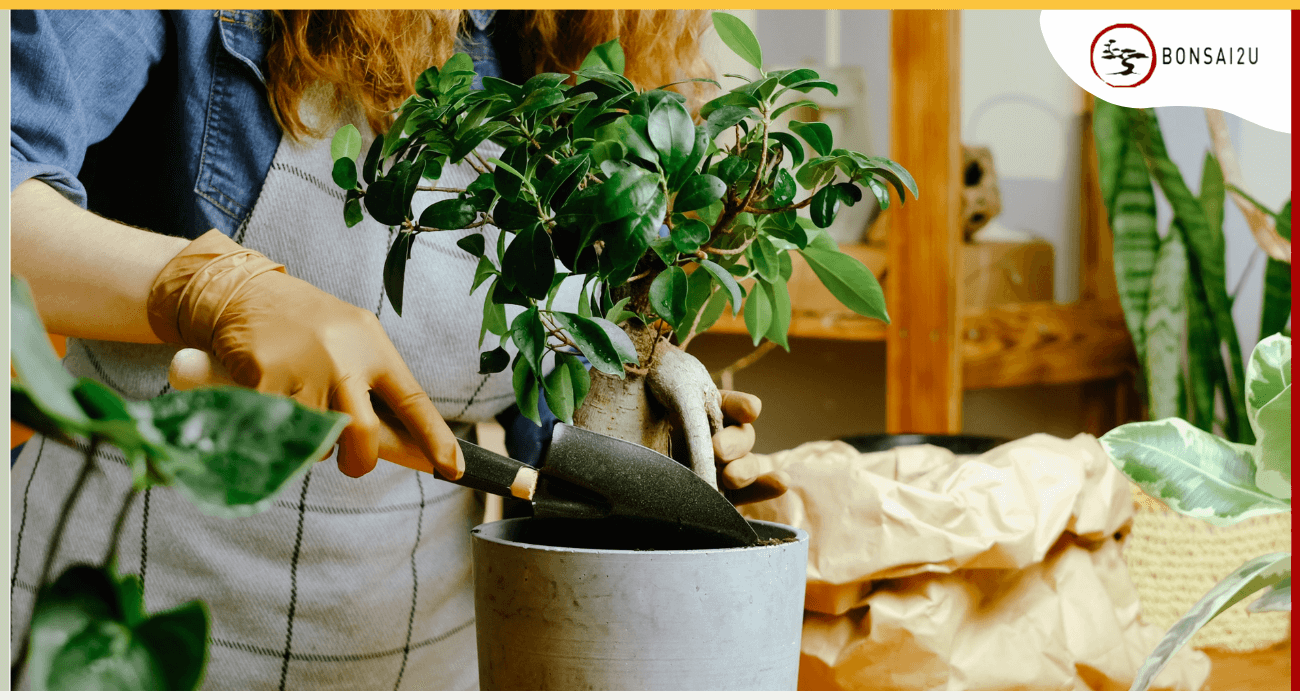
- Remove the old soil carefully and inspect roots. Remove rotten or circling roots.
- Use mesh to cover the drainage holes so the soil does not wash out.
- Place some of the inorganic mix in the bonsai pot then position the tree slightly off centre for balance and visual appeal.
- Use long wires through the drainage holes to anchor the tree firmly while the roots establish.
- Fill around the root ball with a mix of akadama, pumice and lava rock and firm gently.
After repotting, protect the tree from frost and avoid overwatering while the roots adjust. Once settled, your Chinese elm will respond with strong new growth. If you’re unsure when your soil has reached the end of its life, check out our guide on the signs that your bonsai soil needs replacing.
Why Choose Bonsai2U for Your Chinese Elm Bonsai?
At Bonsai2U, we’ve been supplying bonsai trees and accessories since 2004. Explore our full selection of Chinese elm bonsai trees, specialist soils and accessories. If you need step-by-step help repotting, a tailored soil mix or a recommendation for a small indoor Chinese elm, our team is happy to help by phone or email. You can check stock online or contact us for personalised advice.
For more information on how to care for your Chinese elm bonsai tree visit our carde guide or see our article on the top tips for pruning and shaping your Chinese elm.