

Dry leaves on bonsai trees are one of the most common concerns for owners, and one of the most misunderstood. In most cases, dry or crispy foliage does not mean your bonsai is dying. Instead, it’s a clear response to a specific change in its environment or care routine, and it’s often easy to correct once you know what to look for.
This issue is particularly common with indoor bonsai in the UK. Seasonal shifts in light, central heating and humidity can all place subtle stress on a tree, especially during autumn and winter. Understanding why bonsai leaves dry out, and responding early, is key to restoring balance and keeping your tree healthy long term.
Below, we explore the real causes behind dry leaves on bonsai trees, how to fix the issue properly and how to prevent it from returning.
What Causes Dry Leaves on Bonsai Trees?
Dry leaves are a symptom of stress, not a standalone problem. In practice, this stress usually comes from one of the following areas.
Improper Watering
Watering is by far the most common cause of dry leaves on bonsai trees. Underwatering causes leaves to lose moisture, turning brittle and brown at the edges. Overwatering, on the other hand, deprives roots of oxygen, leading to root damage that prevents water from reaching the foliage, which results in dryness anyway.
In UK homes, this often happens when owners stick to a fixed watering schedule rather than responding to the tree itself. Bonsai should be watered based on soil condition, not the calendar. Checking the soil daily and watering only when the top layer begins to dry is far more reliable and closely mimics natural conditions.
Low Indoor Humidity
Many bonsai species originate from regions with higher humidity than is typical indoors in the UK. During winter, central heating significantly dries the air and this is when we most commonly see leaf tips drying or curling.
In real-world bonsai care, this issue often appears shortly after a tree is moved closer to a radiator or into a warmer room. Increasing local humidity, rather than misting excessively, helps slow moisture loss from the leaves and allows the tree to stabilise.
Light and Heat Stress
Bonsai need light, but extremes quickly cause problems. Too much direct sunlight can scorch leaves, especially when combined with dry indoor air. Too little light weakens the tree and disrupts its ability to regulate water, making leaf dryness more likely.
In the UK, this often shows up when bonsai are placed on south-facing windowsills without protection. Bright, indirect light works best, with east- or west-facing positions usually offering the right balance throughout the year.
Soil and Root Health
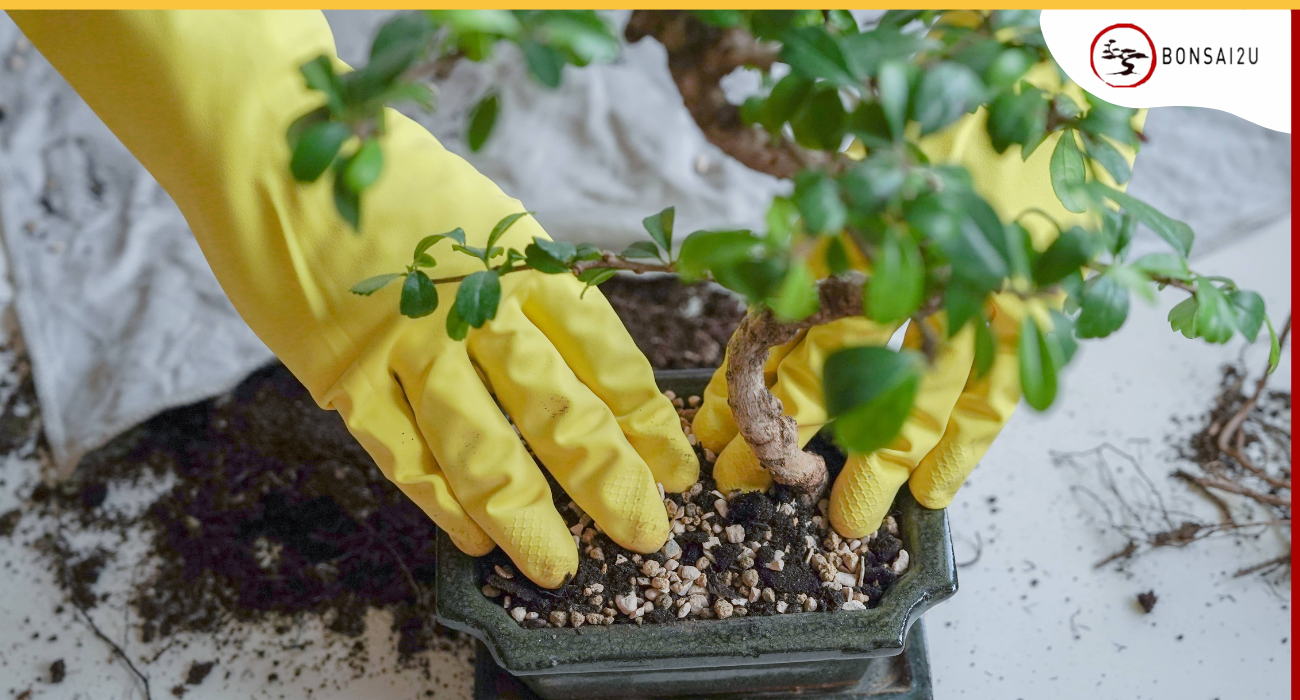
Healthy leaves always start with healthy roots. Over time, bonsai soil can compact, reducing drainage and airflow. When roots struggle to absorb water and nutrients efficiently, leaves are often the first area to show stress.
This is something we regularly see in older bonsai that haven’t been repotted for several years. Refreshing the soil with a proper bonsai mix restores oxygen flow to the roots and often leads to visible leaf improvement within weeks.
Nutrient Imbalance
A lack of nutrients weakens a bonsai’s overall health, while excess fertiliser can burn roots and damage leaf tissue. Both scenarios can result in dry or browning foliage.
Balanced feeding during the growing season supports steady growth and improves the tree’s ability to cope with environmental changes, reducing the likelihood of leaf damage.
How to Fix Dry Leaves on a Bonsai Tree
The most effective approach is diagnostic rather than reactive.
Start by assessing the soil. If it’s bone dry or constantly wet, adjust your watering routine immediately.
Next, look at the surrounding environment, temperature changes, heating sources and light exposure are frequent contributors in UK homes.
Improving humidity through pebble trays or better positioning usually produces noticeable results within a short period. If the soil appears compacted or water runs straight through, repotting at the appropriate time of year may be necessary.
Once the cause has been addressed, removing fully dry or dead leaves can help the tree redirect energy into healthy new growth. With consistent care, most bonsai recover well and produce fresh foliage as conditions stabilise.
What Not to Do When Leaves Turn Dry
One of the biggest mistakes owners make is reacting too aggressively. Overwatering in response to dry leaves often worsens the problem, as does repeatedly moving the tree to different locations. Heavy pruning while the bonsai is stressed can also slow recovery.
Stability is key. Correct the underlying issue, then allow the tree time to respond.
Why Thoughtful Bonsai Care Matters
Bonsai care reflects a wider appreciation for plants in UK homes, where greenery plays an increasing role in wellbeing. Bonsai, in particular, reward patience and observation, offering clear signals when conditions need adjusting.
At Bonsai2U, growers are supported with species suited to UK conditions, alongside practical guidance that reflects real bonsai care challenges, from watering and humidity to repotting and seasonal adjustments.
When dry leaves appear, they’re not a failure. They’re feedback. With the right understanding and steady care, bonsai don’t just recover, they thrive.

