

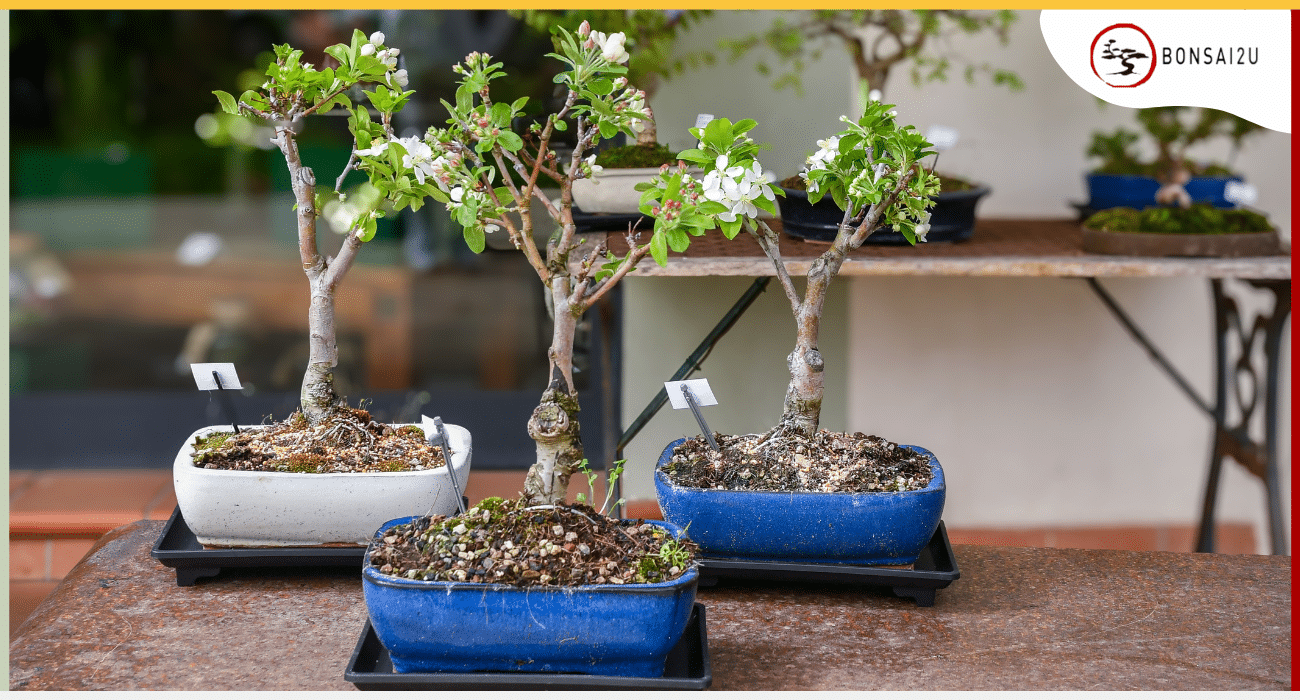
There are thousands of bonsai pots to choose from, including big, small, deep, shallow, oval, rectangular and square. However, the primary role of the pot is to provide a controlled environment for the roots while supporting the overall style and presentation of the tree.
In this article we will discuss how big a bonsai pot should be and how bonsai pot size affects root growth, tree health and visual balance.
How Big Should a Bonsai Pot Be?
The general rule of thumb when choosing a bonsai pot is that the pot length should be about two-thirds of the tree’s height, measured from the soil line to the top of the canopy. If the tree is wider than it is tall, the pot length should be around two-thirds of the tree’s width instead.
Another commonly used guideline is that the depth of the pot should be roughly the same as the thickness of the trunk just above the nebari, which are the visible surface roots.
Guidelines for bonsai pot size:
- Pot length: Around half to two-thirds of the tree’s total height
- Pot depth: Roughly equal to the diameter of the trunk base (nebari)
- Pot width (for round or square pots): Around one-third of the tree’s height
New to bonsai? Read our beginner’s guide, which explains the basics of bonsai growth.
How Deep Should a Bonsai Pot Be?
The depth of a bonsai pot should be roughly the same as the thickness of the trunk just above the nebari (surface roots). However, the exact depth can vary depending on the tree and its stage of development.
For instance, a bonsai pot that is deep might encourage root growth, which is helpful when developing a young tree, but it won’t suit a refined tree you plan to exhibit. Equally, a pot that’s very shallow might look good for show, but if it doesn’t have sufficient depth for roots, the tree can become stressed and unhealthy.
A tree with a chunky trunk is best kept in a deeper pot. Sometimes bonsai trees are kept in slightly bigger pots for health reasons, especially if they are heavy or old.
Why Not Just Pick Any Bonsai Pot?
A bonsai pot provides not only a home for the roots of the tree but also plays an important role in the aesthetic presentation and health of the bonsai tree. The pot acts as a frame for the tree, often chosen to contrast or complement the tree’s leaves, bark, flowers or fruit.
However, a bonsai pot must provide enough space for the root system to grow and access water and nutrients. If the pot is too small, the roots can become compacted too quickly, and the tree may struggle to stay healthy.
For this reason, choosing the right bonsai pot isn’t just about appearance. The size, depth and proportions of the pot need to support the tree’s growth while also balancing the aesthetic aspect.
What Determines the Right Bonsai Pot Size?
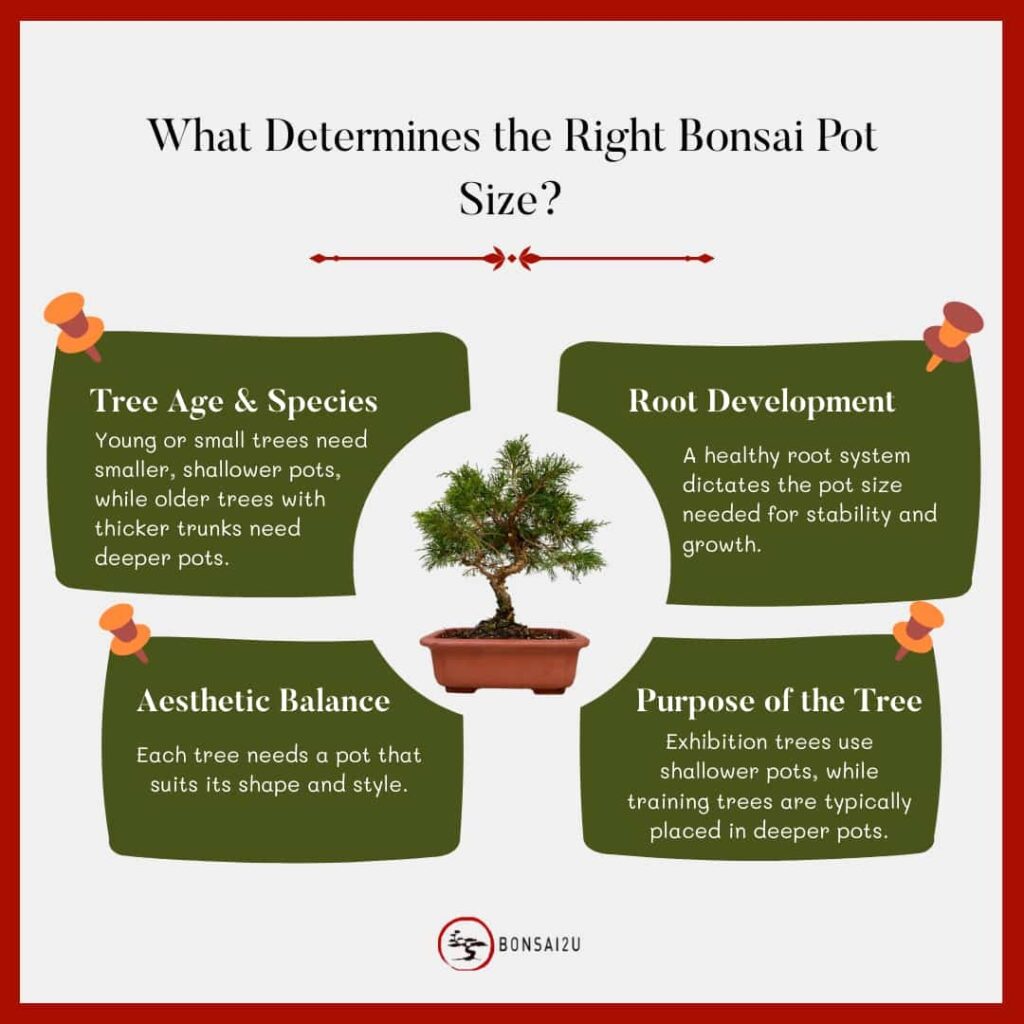
The size of the bonsai pot you choose depends on several key factors:
Tree species and age:
Young or small trees often need smaller, shallower pots, while older trees with thicker trunks are usually placed in deeper pots.
Root development:
A healthy root system dictates the pot size needed for stability and growth.
Aesthetic balance:
Just as clothes have to complement the person, each tree has to have a pot that suits it.
Purpose of the tree:
Exhibition trees often use shallower, carefully proportioned pots, while trees being grown for strength are typically placed in deeper “training” pots. Some trees are also temporarily placed in larger pots for tree health.
How Much Root Space Does a Bonsai Tree Need?
Bonsai trees still require a healthy root system even though they grow in shallow containers. The pot should be large enough to allow the roots to absorb water and nutrients efficiently.
When repotting a bonsai, the roots are usually pruned to maintain a compact root ball, which allows the tree to live comfortably in a relatively small pot.
If the pot is too small for the current root mass, the tree may dry out quickly or show signs of stress. A properly sized pot should allow the roots to grow slightly before the next repotting cycle.
Do Different Bonsai Tree Types Use Different Pots?
There are two main types of bonsai pots: glazed and unglazed. Glazed pots are colourful; unglazed pots are just fired clay with no additional glaze. By tradition, colourful glazed pots are often used for deciduous trees to contrast with foliage, especially in spring or autumn.
Different species of bonsai trees are often paired with different types of pots to complement the tree’s style, size and foliage.
Coniferous bonsai, such as pine or juniper, are commonly placed in unglazed pots with natural earth tones. These colours complement the rugged appearance of conifer bark and foliage.
Deciduous and tropical bonsai are more frequently planted in glazed pots. Colourful glazed pots contrast with foliage, especially in spring or autumn.
Bonsai Pots at Bonsai2U
Choosing the right pot is just as important as caring for the tree itself. If you’re looking for high-quality bonsai pots in a range of sizes and styles, explore our bonsai pot collection at Bonsai2U.
You can find a variety of bonsai pots designed for different tree sizes and stages of development. Our range includes ceramic bonsai pots for display as well as plastic training pots, which are often used while a tree is still developing and needs a little more root space.
We stock different shapes and sizes, such as rectangular bonsai pots and larger containers suitable for bigger or more established trees. For more information or advice on which bonsai pot you need contact our team today.
