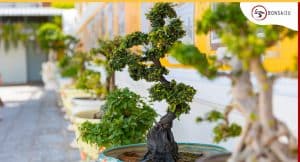


Bonsai trees can sometimes look worrying, especially when they stop producing new leaves or appear less active than usual. This can be caused by seasonal dormancy or environmental changes.
A quiet bonsai doesn’t necessarily mean it’s unhealthy; it may just be resting. The key is knowing when your bonsai is naturally resting or showing signs of stress.
Here, we’ll explain what to look for, when to intervene and how to save a bonsai tree that is seriously struggling.
Is Your Bonsai Dormant or Dying
Looking at the overall condition of the tree can help give you insight into whether your bonsai is simply dormant or if it’s dying.
Signs your bonsai can simply be resting:
- Growth has slowed down during its dormant season
- Branches remain firm and healthy
- Buds are present and appear viable
- The roots aren’t showing signs of rot
- The tree is responding normally to seasonal changes
- There are no obvious signs of pests or disease
Signs your bonsai can be struggling:
- Leaves are suddenly turning brown or failing outside of their normal season
- The trunk or branches feel unusually soft
- The soil remains constantly wet
- Leaves are wilting despite appropriate watering
- New growth is weak or dying back
- Signs of insects, fungus or unusual marks
- The trees have stopped responding to major environmental changes
These signs are important to look out for, but don’t assume that leaf loss automatically means your bonsai is dying. Different bonsai species have different seasonal behaviours. Our team can help you understand whether your bonsai is simply resting or struggling by sending us an image of your bonsai tree.
Understanding Bonsai Dormancy
One of the most important things a beginner bonsai carer needs to understand is dormancy. Dormancy is when a bonsai tree slows down in growth to conserve its energy to prepare for the colder months ahead, also known as resting. Deciduous species, which are outdoor bonsai trees, may lose their leaves entirely during winter, while other species simply grow at a slow pace.
During this period, it is important to note that your tree might need less water and less intervention.
What should you do during dormancy:
- Keep the tree in an appropriate location for its species
- Check the soil before watering
- Avoid unnecessary pruning
- Don’t fertilise unnecessarily
- Protect the tree from inappropriate temperatures
- Monitor constantly for pests or insects
Learning to recognise dormancy is the most important skill as a beginner bonsai carer. Our Bonsai specialists can help ensure you know all you need to and become a pro in bonsai care.
How To Save A Bonsai Tree
If your bonsai tree is struggling, you must do these 5 steps to ensure that your bonsai tree gets the necessary help needed to survive:
Step 1: Identify the problem
To know how to save your bonsai tree, you first have to identify the issue. Look at the potential problems: light, watering, pests, temperature, roots and soil that your bonsai tree might be experiencing at the moment.
Step 2: Change the environment
Once you have identified the problem, change the environment of your bonsai immediately. Placing your bonsai in the right environment for its species can help save it.
Step 3: Adjust your watering
Don’t automatically start watering your bonsai more because it looks unhealthy. Rather, check its growth medium, which measures how often it’s growing at a certain pace and adjust the amount of water that will be needed.
Step 4: Remove dead material
Remove any dead material such as deadwood on your plant, but do not over-prune a stressed bonsai. This can help ensure a healthy and strong bonsai tree.
Step 5: Give your tree time
Most importantly, give your bonsai tree as much recovery time as needed. New growth can take longer to come; it doesn’t immediately happen after correcting the problem.
Need Further Advice?
Here at Bonsai2u, we are not only your bonsai specialists, but we are here to assist you with all your bonsai needs and wants. Being a new bonsai carer or pro, we can help teach you all you need to know to grow a healthy and strong bonsai. To view a wide range of bonsai trees, visit our store.