
Even when a bonsai’s roots outgrow their soil mix, everything above the soil can look perfectly fine. The leaves are green, and there’s no obvious sign anything is wrong. But underneath, the roots may be quietly taking over.
As a bonsai grows, its roots fill the available space in the pot. Once they’ve used up every gap in the soil, they have nowhere left to go except inward, and they start circling and compacting into a tangled mass. At this point, your bonsai is what’s known as root-bound.
What Does a Root-Bound Bonsai Look Like?
You’ll usually only see the full picture of a root-bound bonsai once you lift the tree out of the pot. You’ll find a solid block of that holds its shape, tightly packed with roots with almost no open space left.
Above the soil, the signs of a bonsai’s roots outgrowing its soil mix are more subtle but worth watching for:
- Leaves yellowing or dropping outside of the normal seasonal cycle
- The tree wilting shortly after watering, even though the soil feels damp
- Stunted growth or no new shoots despite good light and regular feeding
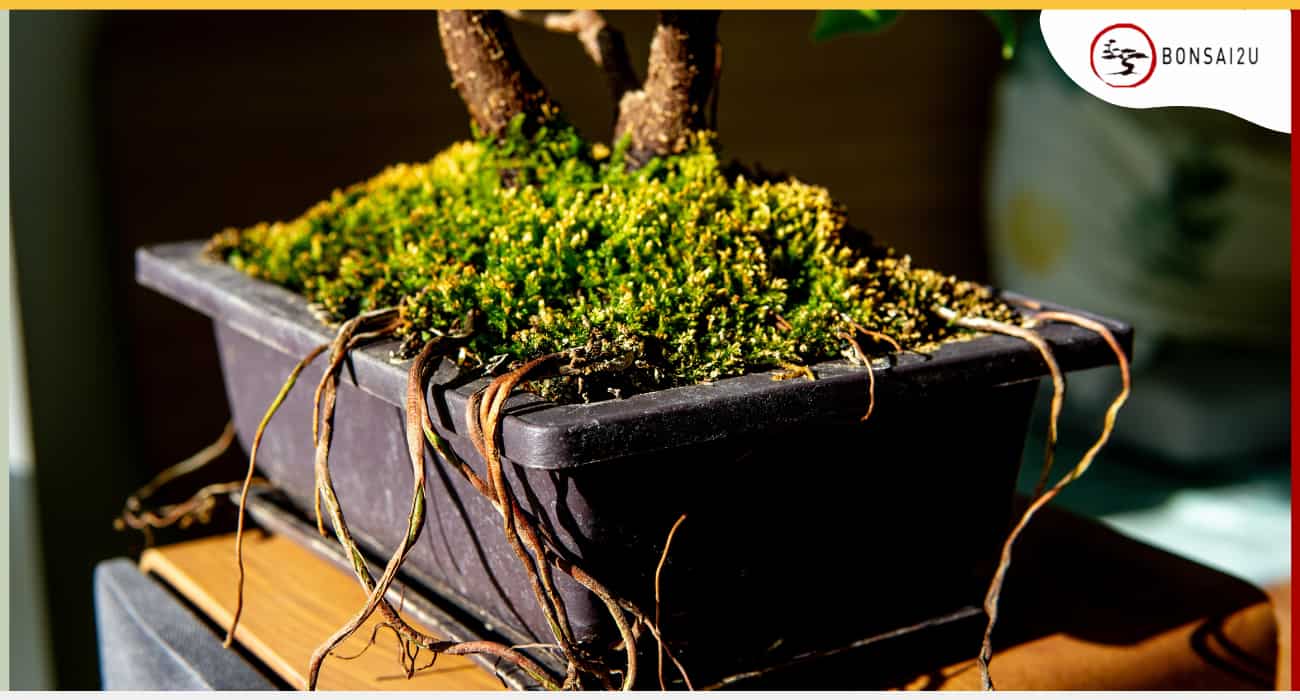
- Roots visibly pushing through drainage holes or lifting above the soil surface
Why Is Being Root-Bound a Problem?
When roots take over the pot like this, the soil stops functioning properly. Water either runs straight down the edges of the pot without penetrating the root mass or gets trapped with no way to drain. Either way, the roots struggle to absorb what they need, which will eventually weaken the tree.
How Do Roots End Up Like This?
It’s a gradual process. Bonsai roots naturally grow outward until they reach the edge of the pot. With no space to continue, they start circling. As they thicken and press against each other, they push out the remaining soil and leave smaller roots with nowhere to develop. Those feeder roots are the ones actually responsible for absorbing water and nutrients, so losing them matters.
What Should You Do When Roots Outgrow the Soil?
If your bonsai roots have outgrown your bonsai potting soil, you need to reset the root system, which means pruning or repotting. The process involves:
- Removing the tree and gently combing out the root mass
- Trimming back the circling outer roots by up to a third
- Getting rid of any thick, woody roots that aren’t doing useful work
- Refreshing the pot with a free-draining bonsai potting soil
Using mesh at the base of the pot helps stop roots from circling endlessly. As roots try to grow through, they naturally get pruned, which encourages better structure above.
How Often Should You Change the Soil for a Bonsai Tree?
There isn’t a fixed schedule for when to change your bonsai soil. It depends more on what’s happening below the surface than the calendar.
- Fast-growing or younger bonsai may need fresh soil every 1-2 years.
- More mature, slower-growing trees can often go 3-5 years
Bonsai roots don’t just sit still. They keep growing until they fill the entire pot. Once that happens, the soil effectively disappears, replaced by a dense mass of roots. That’s the point where changing the soil becomes necessary.
Need More Bonsai Advice?
Bonsai2U has been supplying UK enthusiasts with specialist bonsai products since 2004. Our shop stocks everything you need for a successful bonsai tree:
- Bonsai soil suited to both indoor and outdoor species
- A full range of tools, including root rakes and scissors
- Ceramic and plastic pots in a variety of sizes
- Drainage mesh to help manage root circling between repots
You can browse the full range and order online on our website or contact our bonsai experts for more advice on root growth or soil mixes.